
Unlike the Rest: A Doctor’s Story
Unsinkable Storyteller: Dr. Chika Stacy Oriuwa, MD
This Unsinkable story discusses trauma related to racism, grief, and loss. We invite our community to read it only if it's the right time for them. If you're struggling, please reach out to the Crisis Text Line, Kids Help Phone, or our culture & community resources.
In the coming weeks, Chika’s story will also be published in Lamplight Magazine, in print & digital. Lamplight is an Unsinkable publication founded & edited by Publications Lead, Mikaela Brewer, to be a home for mental health care providers. It’s published digitally throughout the year, and once in print every October 13th.
Book Review: Unlike the Rest by Dr. Chika Stacy Oriuwa, MD
by Mikaela Brewer
En route to meetings and events between April and June 2026, I walked through the University of Toronto’s campus more frequently than I ever have. Watching the late snow prickle the early leaves, I thought of one of my best friends—a former basketball coach and mentor—who passed away in late March. He adored this path along University Avenue, curving into Queen’s Park and Philosopher’s Walk. At the end of April, as the last frosts melted to reveal daffodils, crocuses, and tulips, I stopped near the juncture of University Avenue and Queen’s Park. I hadn’t noticed before that the Medical Sciences Building was nestled there, behind blushing cherry blossoms. I watched a few students and faculty enter and exit the double glass doors, shifting my shoulders to distribute the weight in my backpack. I always carry a few books—you never know whose voice and wisdom you’ll need to spend time with. At once, I knew the book I needed—it was unlike the rest.
Could the wound of losing a mentor, perhaps, welcome another through its opening?
Often, when we look for or to mentors, we think of our future selves. Dr. Chika Stacy Oriuwa, a physician at the University of Toronto, nationally ranked spoken word poet, thought leader, and author of Unlike the Rest: A Doctor’s Story, was already someone I deeply admired. But reading her memoir showed me something vital: When we’re searching our past for joy amid confronting pain, trespass, shadow, and grief, it’s possible—and perhaps necessary—to look for mentors in retrospect. In other words: For our past selves.
Unlike the Rest is an exceptional balance of storytelling, emotion, and teaching. Dr. Chika’s writing and thinking simultaneously held me and held me accountable. As a white woman, I felt an integral part of the book’s braid of conversation, story, wondering, and memory. And although I’m immensely grateful to love and look up to so many Black women in my life—best friends who are lawyers, professional basketball players, and doctors—that admiration would be remiss if I didn’t acknowledge that there are ways in which our paths may never intersect. Rather, they run parallel in both seen and unseen ways. To feel this—to see that it’s not comparison but profound alignment—we most often need to follow the roots into the past…
***
In the early 2000s, as I played ‘patient’ to my grandfather’s ‘doctor’ in a compact, century-old living room in Barrie, Ontario, Dr. Chika knew she’d be a doctor in a living room just a few hours south in Brampton. She also knew she’d be a writer, and as a young girl, brought the fields together like the two hands of a body:
“My characters ranged from a princess remedying a war-torn kingdom to earthquake survivors trapped under rubble for several days without sustenance. I don’t know why I felt compelled to write stories like these, when lighter tales seemed more accessible and age-appropriate. I remember, even as a young writer, leaning into the darker, more elusive parts of life. Writing about the beauty of the world seemed easy, yet writing about suffering seemed necessary. Years later, I came to understand that poetry, much like medicine (and my eventual specialty in psychiatry), necessitates an unflinching examination of life—the good, the bad and everything in between.”
In the opening pages of Unlike the Rest, as Dr. Chika skillfully paints a picture of her family, Igbo ancestry, and the generational impact of the Biafran War, I reflected on my own family’s centring of English and refusal to retain Scottish Gaelic. Dr. Chika’s storytelling was an invitation into a form of displacement that white people often forget to interrogate within themselves—we absorb and accept a lack of cultural centre, as Christabel Mintah-Galloway writes in “White People Need Ancestral Excavation.” As I read Dr. Chika’s reflections on her parents, I saw more profoundly my own father’s blankness, hardness, absences, and how my relationship with him is similarly shaped by his dedication to the role of provider. Dr. Chika writes:
“When I sought more from him emotionally, I realized the well of what he had to give had run dry. An “I love you” from his children was met with a frozen stance and a terrified glare, as if he were staring down the barrel of a rebel’s gun. With my mother’s assistance, I learned to codify his behaviour into a unique love language.”
Just before this passage, Dr. Chika wrote that her father was thirteen when the militia invaded his town, noting the succeeding “unspoken casualty of the conflict.” Importantly, as much as the parallel I felt offered connection and understanding in my body, I’m aware that war is a casualty much further back in my own ancestry. But trauma’s reshaping of love is a constant in many lives. Likewise, as Dr. Chika shares her mother’s selflessness in the wake of war and rigid gender roles—which again held a mirror for me—the throughline of the “Strong Black woman” archetype seeps through to Dr. Chika, which she generously writes on:
“Scholars define this archetype by three central themes in Black womanhood: emotional restraint, caretaking, and independence. It is the same narrative that kept many of the African aunties in my community shackled to loveless or abusive marriages with a smile, their plight preordained. It afflicts the single mothers left with children whose fathers were torn from them. I had seen this archetype play out in so many contexts: from civil rights history, where Black women did the bulk of physical and mental labour in community organizing, to the Black faculty across academic institutions doing the same, to my own reflection in the mirror.”
Dr. Chika continues, emphasizing why rest, softness, rage, and joy are sacred for Black folks, and women in particular:
“Often, in quiet moments on the wards, or during days spent pulsing through clinics and keynote presentations at major conferences, l craved softness. I craved the weight of the endless responsibility to right society’s wrongs to be lifted from my shoulders. I yearned for a moment to cry on stage, to be held, to be vulnerable. I wanted, and eventually came to demand, that others in leadership positions take up the burden of change. Or, at the very least, value the work that often lands on our desks or kitchen tables. I would soon learn that despite wearing a heavy, invisible superhero cape, there would come a day when the algorithm would fail, and my professional and calm demeanour would be shattered. I would be reminded that I am simply human, and people could say things that would sometimes make me break.”
When I’ve struggled most in my life, I’ve leaned on my closest friends—many of whom were and are Black women. I haven’t always wondered why this is. Dr. Chika invited me to consider it more deeply: Is there implicit racism around assumed strength, funnelled into an expected caregiving role, even though I know and have held my friends’ pain, softness, and joy? The texture and nature of these relationships are indisputably trust, genuine care, friendship, and value alignment. But that doesn’t mean they’re not layered and striated by all that coexists, rather than cancels out. Relationships are complex, and Dr. Chika shares a sense of love-as-action through how she writes her relationship with her partner, children, friends, patients, and co-workers.
But love must also take shape as felt honesty inside us. It’s easy to become accustomed to exhaustion—to believe that hunger-as-soothing is just what it takes, as Dr. Chika shares of her complex relationship with food in school. Similarly, she couldn’t do the poetic or medical work that fuelled her—or become who she was destined to be—“if [her] spirit was corroded through the systems that are meant to exhaust Black women.”
Hunger and exhaustion are intertwined, including not only navigating racism, but also navigating it as invisible to many white folks:
“Though I had subconsciously code-switched throughout university, abandoning my Brampton slang and occasional Naija (Nigerian) pidgin for my most eloquent English, the toll of suppressing my natural disposition became apparent only when I expected there to be someone in the space with whom I could share it. But there is a singular pain that comes with feeling lonely when you’re not alone, among friends whose realities are so different from your own that you feel like the only option is to dilute who you truly are. Worse yet was the way in which I gaslighted myself by questioning whether racial slights toward me were real or imagined, mild or severe, afraid to check in with my peers, only to have them play the role of devil’s advocate. Even when they didn’t, and extended comfort, there was the lingering feeling of sympathy in lieu of empathy that made me feel even more alone. Years later, I would come to explain this feeling to my husband as “having a front row seat to my pain, but never being able to step on the stage with me.””
Further, after learning about unconscious bias, cultural sensitivity, and the needs of marginalized community members throughout medical school, Dr. Chika wondered, “Simply, what do we do when we are also part of the marginalized?” The responsibility of responding to her question was swiftly placed back on Dr. Chika. Relying on Black folks to educate us—especially via their most painful experiences—isn’t allyship, and Dr. Chika’s storytelling emphasizes this, again, as an invitation. Via a reflection on her article with Flare, she offers us imagery to carry—a visual that’s impossible to forget:
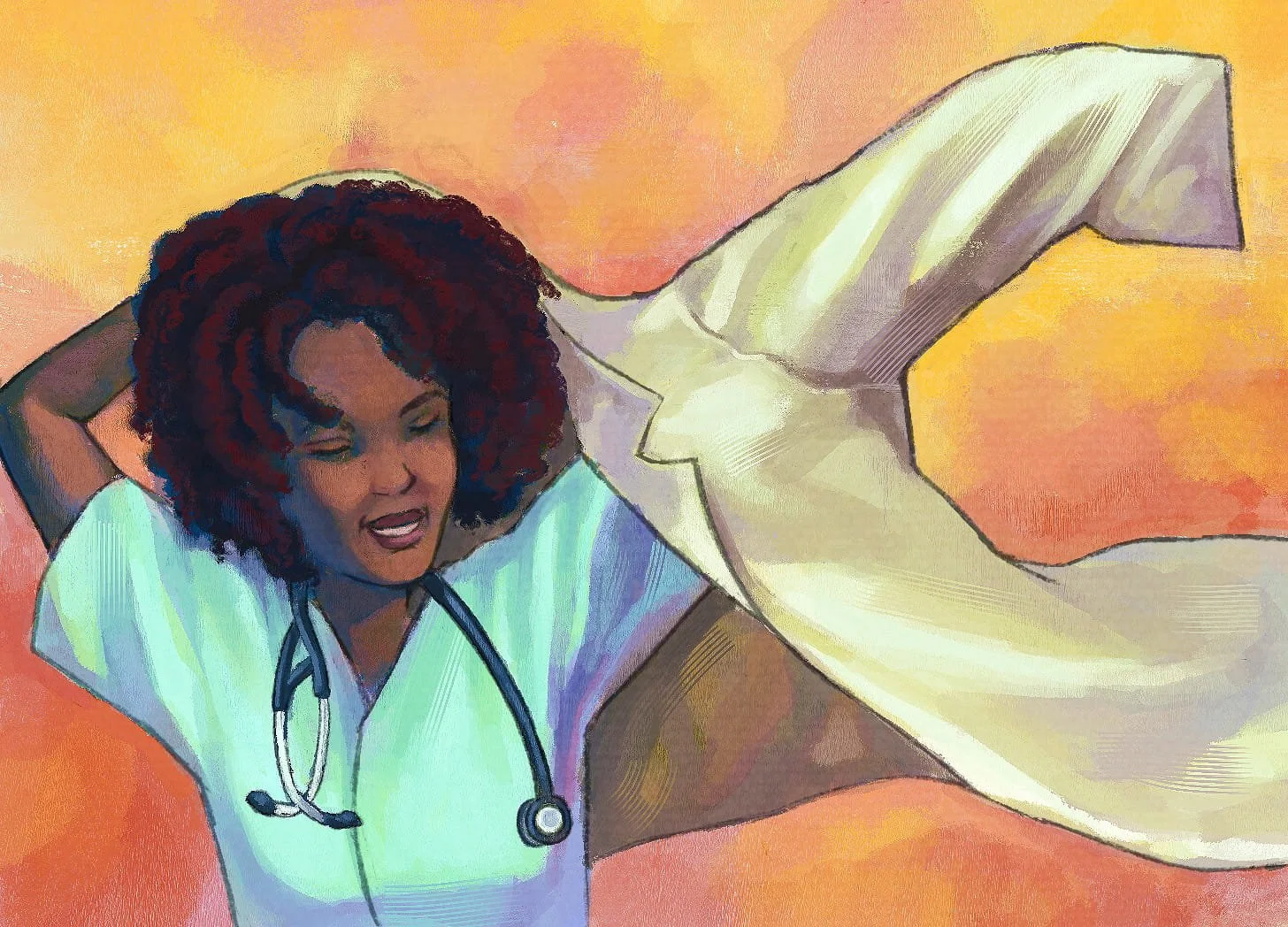
“Wearing a physician’s coat, quite literally, brings out the hues of my dark skin because of the stark contrast. More metaphorically, however, it’s a direct challenge to the people who try to question the intelligence of Black students, those who try to make us feel that we don’t belong in medicine. In rebuttal, when I wear a doctor’s coat, I am actualizing my personal full potential as a Black woman; I am owning my brilliance and the gifts that are often hard-won for people like me. I am, as I stated, Blacker than ever in my physician’s coat.”
Unlike the Rest is unflinching in its storytelling, and its pages dance with Black celebration, love, joy, and excellence. To me, reading Dr. Chika’s weaving of precise medical knowledge, thoughtful clinical reflections, and creative writing felt like witnessing a long-protected root system, carefully nurtured over time, for the visible branches of passion and ethos that Dr. Chika would grow to be known for
Without forcing an answer, Dr. Chika shares many thought threads, welcoming some of our most complex medical questions into the space of her story and practice:
“If we, as specialists in medicine, were convinced that mental illness was every bit as real and as debilitating as physical Illness, were we not called upon to validate the suffering that could follow someone for decades even after exhausting every avenue of treatment? At what point is mental Illness intractable? And if we denied patients the right to a humane end of life, what measures would they take on their own to seek liberation? Is our goal as doctors to extend life, by any means necessary, or to maintain dignity and grace in end-of-life care?”
She continues, later, to help us see the unique type of grief care professionals carry—“the stories that stick with [them]—the patients [they] think about on the subway ride home after work, or between sips of tea on quiet Saturday afternoons. The ones whose spirits stay behind in their rooms long after they leave.”
And even amid these questions and their accompanying grief, she falls in love with psychiatry, noting all the places where this love moves from flame to a sturdy, banked fire, including charming cafés throughout Toronto where community members approach her to share their stories.
But the strongest love isn’t impervious to harsh wind and rain, particularly when that extreme weather is both intentional and preventable. On why she chose art as the purest form of advocacy alongside her medical career, Dr. Chika writes:
“I hadn’t been supported often enough through the curriculum in the way that I felt was necessary. My concerns were being either erased, minimized, or pushed to the fringes. My art felt critical. I was compelled to speak up for every Black medical student who had ever felt silenced or was made to feel that their plight was irrelevant. For every Black physician who didn’t fit into the mould of what a doctor looked like.”
At a youth leadership awards ceremony, she says: “The question is not whether to do the right thing but how to do the right thing.” Compassion and care are practices embedded throughout not only the writing in Unlike the Rest but the stories it tells—whether thoughtful reflections on interactions with patients or the type of visceral, somatic attention only an artist pays to their work and environment:
“Every specialty has a soundtrack—a distinctive melody that a discerning ear in the hospital can tease apart from the rest. Within the walls of the operating theatre one can appreciate the buzz of electrocautery (electric current used to cut through tissue or form scarring), surgical instruments landing on metal trays, or the surgeon’s sigh of relief after a successful excision. On the pediatric floor, the uproarious laughter of children echoes through the hallways, juxtaposing the pulsing of vitals monitors above in the ICU or the wails of labouring mothers on the floors below.”
***
From 2016 to 2020, as Dr. Chika studied medicine at the University of Toronto, I studied Human Biology and creative writing across the continent in Stanford, California. We experienced one of our lowest, loneliest, and most sorrowful moments at the same time in 2017. In the raw aftermath, Dr. Chika found where and how she could spread her roots. Reading her words showed me not only that I did the same thing, but that who I am now was, in part, born then. As Dr. Chika worked with the Black Medical Students Association (BMSA), helped build the Black Student Application Program (BSAP), and continued writing exceptional poems such as “SKIN” and “Woman, Black” alongside the Daffydil musical, I published poems and essays about my 2017 suicide attempt for the first time, later performing both on stage.
It’s been six years since speaking at our respective virtual COVID graduations. And when I look into my past and see the coexisting joy, sorrow, and memories I’m not particularly proud of, I think of Unlike the Rest.
The book title only appears on page 128, in reference to leaning on her fellow BMSA members whenever Dr. Chika felt ‘unlike the rest’ in medical school as the only Black student in a class of 259. But these words carry so much more—Dr. Chika’s memoir is unlike the rest and truly a conduit for seeing her as unlike the rest in passion, care, and attentiveness for herself, her family, her people, and her patients.
That sort of love offers an aura for others, the way trees remain an exquisite example of collective care and a breathtaking visual of how wounds heal without disappearing. Much like the past. And much like how my friend loved this idea so much that I got it tattooed after he died.
The synchronicity in our stories startles me, but perhaps I’m just paying closer attention now, courtesy of Dr. Chika’s wisdom.
Reviews of Unlike the Rest include adjectives like vivid, inspiring, vulnerable, poetically charged, empowering, honest, sincere, compelling, painful, tenacious, generous, unrelenting, triumphant, and lingering. I’d agree wholeheartedly: Dr. Chika is a flame for so many—in light, guidance, and warmth. But what lingers, to me, is the smoke trail—a tether that’s both alive and ash, connecting who we were, who we are, and who we can become.
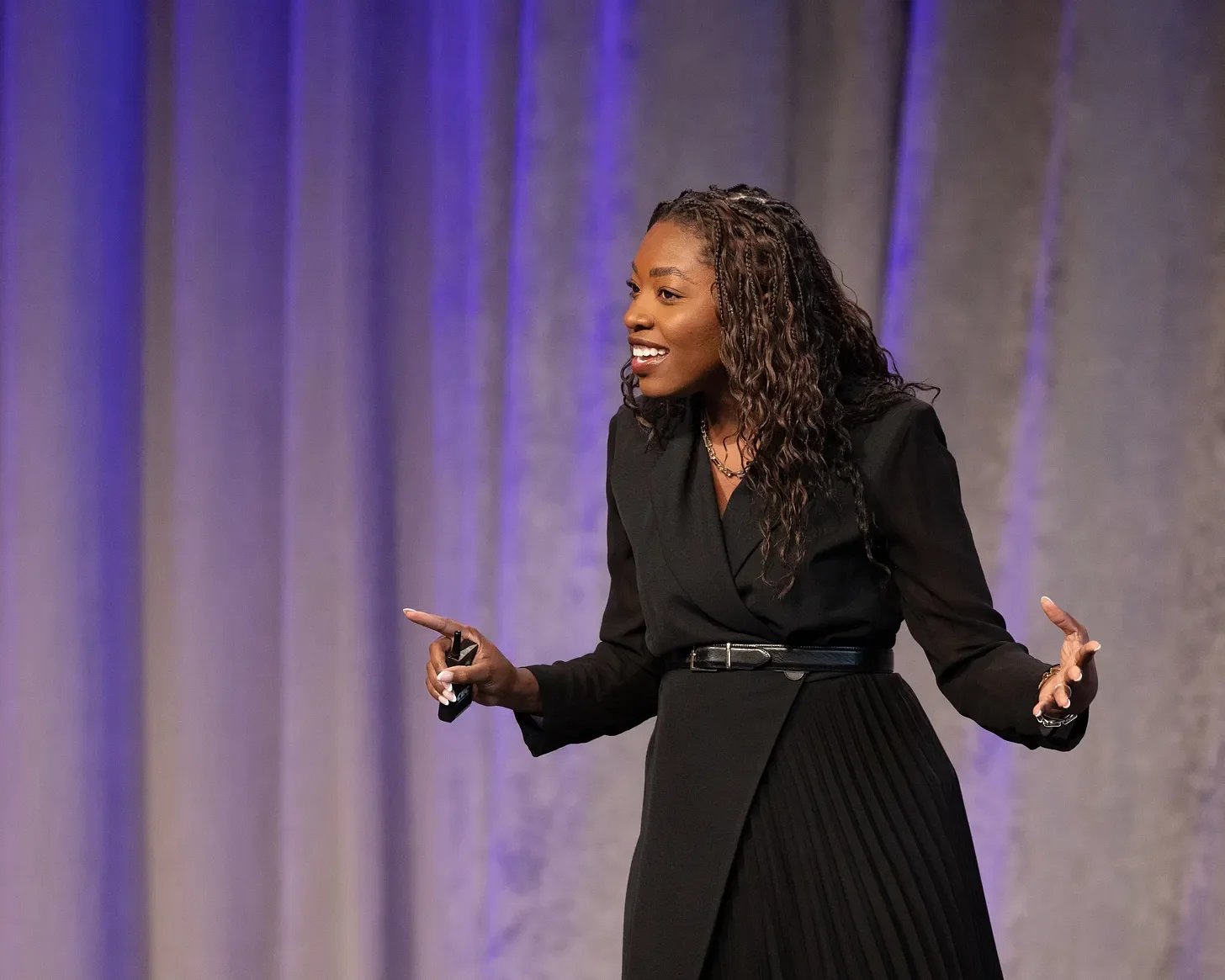
Dr. Chika giving the Innovation Blueprint keynote at the Art of Leadership Women in Calgary
Interview
with Dr. Chika
MB: How did motherhood shape and inform your journey? Did it show up in unexpected ways, before, after, or while having children?
CO: Motherhood informed so much of my journey; I wrote the book during my maternity leave, which [offered] this interesting point of reflection. I was in that chapter of my life. I’d paused my medical training, which was desperately needed, and I was immersed in the world of a newborn while writing the first draft. I was able to reflect on the preceding decades of my life and unpack them with tenderness towards myself. It was an interesting and evocative experience.
Being a mother changes the lens [through which we see] the world. It was an extension of my soul to another person—this deep and profound love that made me feel like I wanted to do everything I could to protect and nurture my child. But it was also an opportunity to investigate and interrogate the kind of mother I wanted to be. Writing my book at that time helped me do an autopsy on the first 30 years of my life—maybe an archeological dig is a better [metaphor]—to understand who I am, what experiences and trauma shaped the person I was, and how these might shape the mother I’d be. Being able to write a book at that time allowed me to extend grace to myself as I processed these questions.
Parenting forces you to extend that grace in many ways—to yourself and to other people. I was writing from that vantage point: A profound depth of grace. And that’s the greatest gift I could’ve given myself. I felt immense gratitude and fire to write a story—my story—and leave it as a legacy for my children. One of the greatest gifts you can give your kids is your truth. I think about my parents, and the mythology surrounding who they are and who they were before they became parents. Demystifying that mythology for my children is a profoundly humanizing thing I can give to them.
I continued the editorial process for the book through my second maternity leave, and it was beautiful to watch my family grow in that context—as the book came into fruition. Now I have my third child, after the book was born, and I’m reflecting on the stories I could have shared. Maybe they’ll go into the next book!
MB: Yes, of course. Maybe things felt a bit different for each child, but that just informs your life and relationships in such beautiful ways. And something that resonated with me, throughout the parts of the book where you’re talking about motherhood, was the energy of your parents and your grandparents coexisting in [your own] narrative. It was beautifully intertwined.
I love the reflection [you shared here], too. That’s a wonderful segue, thinking about your parents and your grandma, because I know you opened the book with [losing] her.
And you could argue that there’s a grief associated with becoming a mother, too.
CO: Yes. We could spend the whole time talking about that, to be honest.
MB: Yeah—I think we so often tend to frame grief around the loss of a person, and it doesn’t always take that form. It takes many forms throughout your story, around people, life phases, hopes, expectations, safety, patients, and more. How did/do you walk with the different griefs across your life?
CO: Grief is such a fascinating topic to dive into. As you said, it can relate to the loss of a person, but it doesn’t always. For me, there were ways in which I talked around the topic of grief without actually labelling it.
Of course, there’s a sense of grief as it pertained to my patients: The grief of witnessing others’ grief. I wrote about that in the book—what it was like to be with families, especially during the pandemic, as their family members were dying. I’d experienced grief before when friends and family passed away, alongside other traumatic experiences, but there was something about witnessing another’s profound grief that struck me differently.
Another element would be the loss of identity, and the idea that we can grieve a future that wasn’t yet ours. For example, I wanted to attend the University of Toronto (U of T) because I hoped to be a part of the Black Medical Students Association. That was one of the things [U of T] positioned for us when we were interviewing—one of the selling points. I was so taken and excited by the idea that I could be a part of this group, and leave behind not having other members of the Black community in my academic spaces. There was all of this pent-up excitement, so arriving there to find that this wasn’t the case [incited] a grieving of what should have been. That was so painful for me because it was almost an insult to injury:
When you have an expectation, and it doesn’t materialize, that’s another form of grief that’s [devastating] to come to terms with.
And then, of course, there was the loss of my grandmother. I never met my maternal grandfather, who died when my mom was young, and I wasn’t overly close with my dad’s parents. My maternal grandmother left the most profound impact on my childhood, and she was very close to my mom. [Her relationship with me] felt like a natural extension of a love that extended across three generations. When my grandma died, I’ll never forget my mom’s grief and how it enveloped her. Naturally, it enveloped all of us because I’d never seen her like that. I’d never seen her so devastated and heartbroken—viscerally heartbroken. As a ten-year-old, grasping the concept of death was very hard. All I knew was that it brought profound sadness and changed people on a cellular level. My mom was never the same after her mom died.
And honestly, now, I’m terrified of losing her; my grandma was in her early 70s when she died, but it still felt like her death came far too soon. Seeing that kind of suffering—she died of cancer—inspired and informed my desire to pursue medicine, to do everything I can to save lives.
And that’s what we’re tasked with doing as doctors.
MB: Thank you, first, because I know these things aren’t easy to talk about. And you’re right: We don’t always name grief when we experience it, even though it’s threaded through so many areas of our lives. Especially as a doctor, and even as a writer and performer, I wonder if one of the tasks of truly being present in both of those roles is understanding how to walk with the grief in your life—both how you carry it and how you present yourself as someone who doesn’t bury it. Because I think people can sense when someone has known grief, and also worked to figure their way through it—not perfectly or well, but fully. You carry it with you; it doesn’t leave you.
On a similar note: Poetry and medicine (like art and science more broadly) are often divorced. Where does poetry, or your creative skill as a writer/performer, show up in your day-to-day as a doctor? And vice versa?
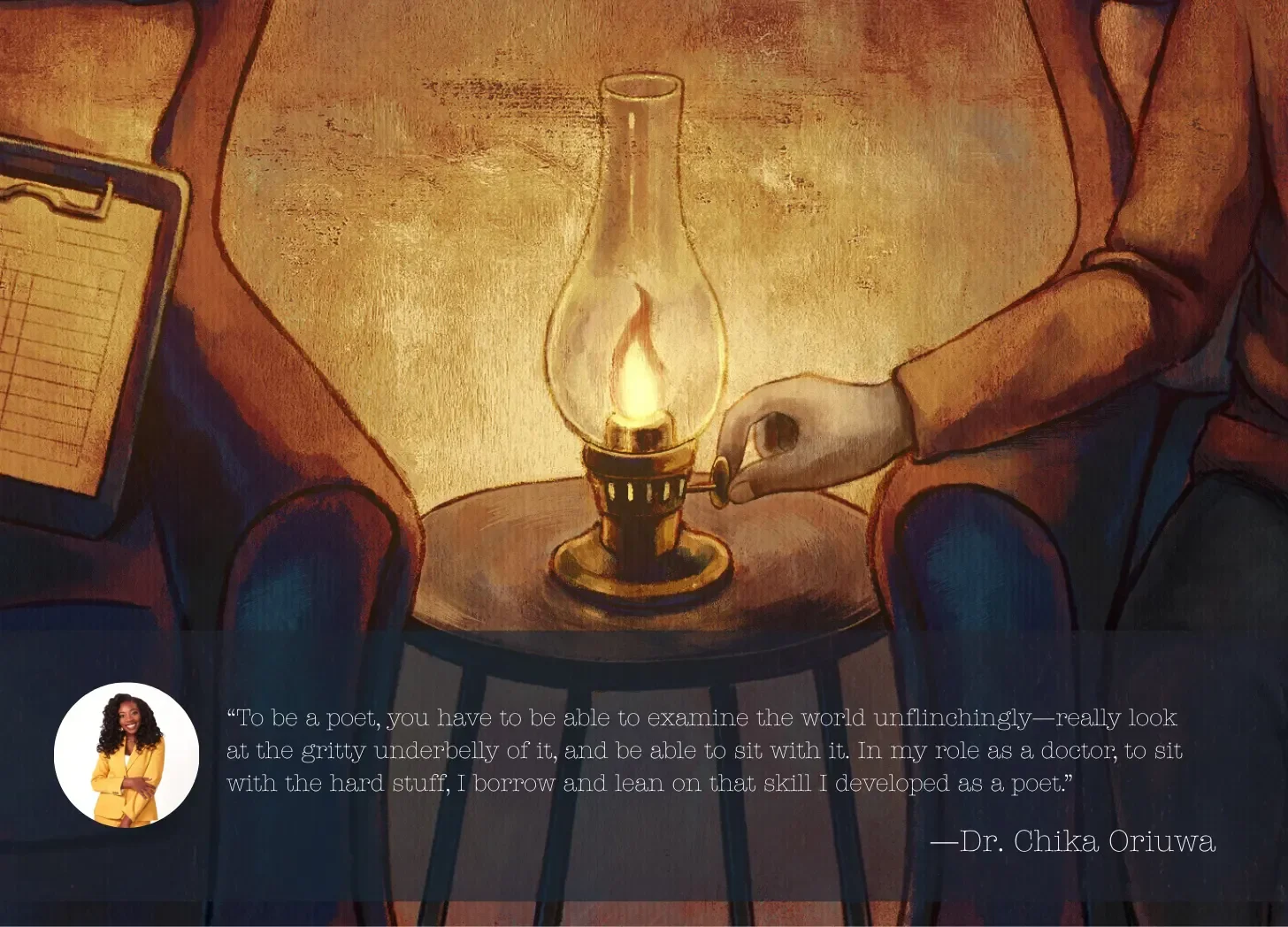
CO: To me, poetry requires investigation—this interrogation of the world around us in a nuanced and flexible way. To be a poet, you have to be able to examine the world unflinchingly—really look at the gritty underbelly of it, and be able to sit with it. In my role as a doctor, to sit the hard stuff, I borrow and lean on that skill I developed as a poet.
I also think, as a poet, being able to take in the immensity and beauty of life, nature, and experiences, and bring them to life through words, is such an inextricable skill and talent. As a physician, especially as a psychiatrist, you have to take a similar approach. A human being is in front of you with vast lived experiences, and there are many intersecting factors that lead to their clinical presentation. Our job as psychiatrists is to create a cohesive and cogent narrative that explains why this person is in this particular situation. In psychiatry, that’s called ‘formulating’ someone’s clinical presentation. Psychiatry allowed me to feel most like an artist because I’ve been practicing that skill my whole life: Taking something vast, intricate, and complex, and bringing it to life in a [compressed], linguistic fashion. That’s similar to what I do in medicine.
MB: Yes. That’s beautiful, and a way of thinking about it that’s deeply needed. We don’t initially think of medicine, maybe specifically psychiatry, as needing that sort of creative care and flexibility—to truly listen to someone, piece together what their experiences are, and [sit with] all that they don’t say (that’s perhaps in parallel to white space on a page). And on a similar note, in the book, you allude to how the medical and poetic fields tend to prioritize Western canon, models, practices, and form. Could you share more about your relationship with creativity in that way—as a practice of care? The example I’m thinking of is the poster you created for hair care, and thinking of it as mental health care for Black women.
CO: For sure. Especially in inpatient psychiatry, one of the things I often ask patients to do is reflect through journaling, writing, and creative expression. On the wards, we have numerous creative activities that we encourage patients to [engage with].
And often, when I’m sitting with them during their daily check-in, I encourage patients to talk about the artistic and creative things they’ve done. It’s an outlet for them, their emotions, and how they can [begin to] process what’s happening around them. For many of them, it’s also much easier to connect to art than to sit and talk about what they’re experiencing. They love and maybe prefer to draw, write, and do a number of different artistic things. I’ve found that creative catharsis is a therapeutic modality. And there’s absolutely a space for creative healing in medicine. Psychiatry is probably one of the best spaces where that can be demonstrated and expanded.
MB: Absolutely. Especially with people having different inclinations toward different creative practices, and even tapping into ancestral connection points that could be supportive, creative, and helpful in ways not initially thought of or seen on the surface.
Thank you so much, Chika.
CO: Thank you for the platform and opportunity—it really means a lot to me.
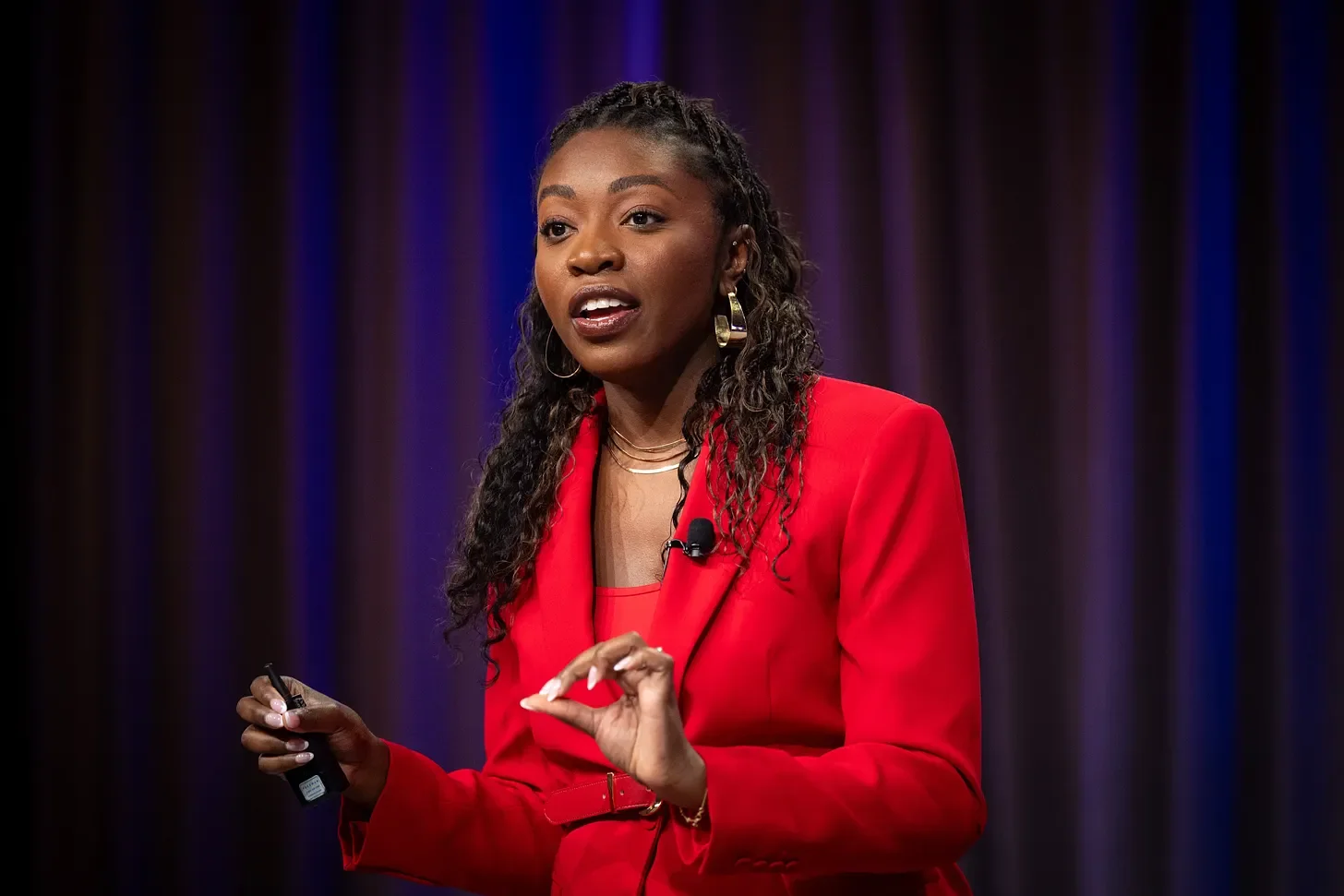
Dr. Chika giving the Innovation Blueprint keynote in Vancouver
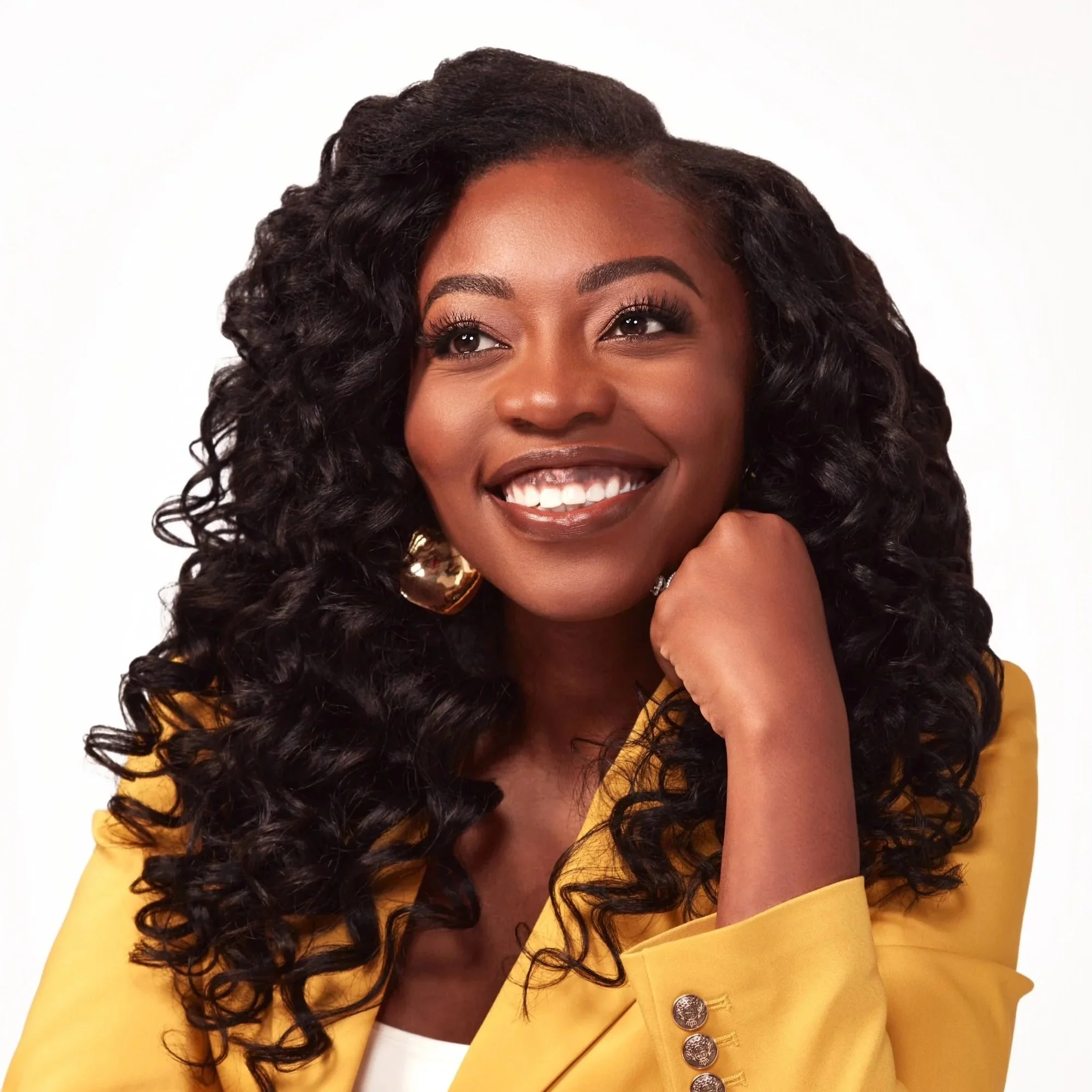
Dr. Chika Stacy Oriuwa is an accomplished physician, nationally ranked spoken word poet, and thought leader. She is a multi-faceted powerhouse whose journey exemplifies authentic leadership in every aspect. Through powerful storytelling and compelling narrative, she draws from her diverse experiences — across sectors, stages, and disciplines — to share meaningful and actionable insights on leadership, connection, and wellness, and how to unlock our true potential for transformative results in our organizations, communities, and lives.
Oriuwa’s career is a testament to her insatiable curiosity about the human experience and the profound connections that define it. She is currently a resident doctor in psychiatry at the University of Toronto where she earned her medical degree and became the first Black woman named sole valedictorian of the department. Oriuwa also holds a master’s degree in health systems leadership and Innovation. This, combined with her medical background, has established her as a sought-after expert in the science and practice of leadership, innovation, and performance.
Named one of TIME magazine’s “2021 Next Generational Leaders” and one of Maclean’s Power 50, Oriuwa has served on multiple boards informing their efforts in advancing equity, leading authentically, and prioritizing workplace wellness. She has also been named one of Best Health Magazine’s “Women of the Year”, was honoured with a one-of-a-kind Barbie doll made in her image in recognition of her impact, and been featured in several major media outlets, including CBC’s The National, CTV News, CP24, Toronto Star, and TODAY, amongst others. In 2024, Oriuwa published Unlike the Rest, her memoir of becoming, belonging, and being seen on her journey as a medical trailblazer and leader.
An in-demand speaker, Oriuwa draws from every dimension of her life — physician, poet, mother, and leader — threading together the clinical, creative, and deeply personal to captivate and inspire audiences. She infuses her keynotes with the rhythm, emotion, and precision of poetry along with the levity of parenthood to transform critical and timely discourse into an artful, relatable narrative that leaves a profound, impactful, and lasting impression.
Connect with Dr. Chika on Instagram: @drchikaoriuwa, & online @ drchikaoriuwa.com.
Visit her Speaker’s Page here.
