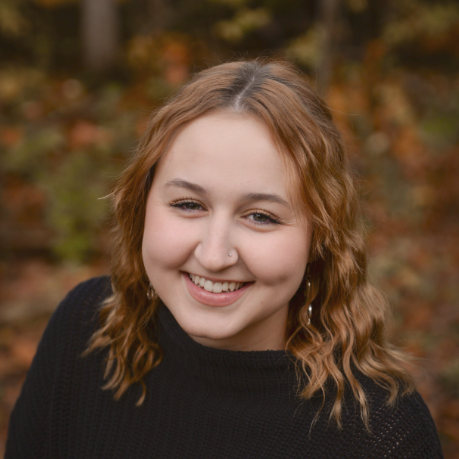
Storyteller: Liv Miller
“Learning that Paige’s own struggles prompted her to create a community care project startled something in me. I started to wonder if the very mental health struggles that I had been experiencing for years made me the right person to start a conversation about it. I was already a student leader and volunteer while navigating personal challenges—not at all in a “perfect” place with my well-being but still making a difference. I thought, maybe—just maybe—my mental health experiences don’t hinder my ability to support and impact others’ mental health. Perhaps I could create a bridge of hope.”
This story was originally published in Issue 2 of Lamplight. Lamplight is an Unsinkable publication designed to be a home for mental health care providers. It’s published digitally throughout the year, and once in print every October 13th.
Headphones in. Comfort song. Eyes to the corridor floor. T-minus 2 hours until freedom.
My inner dialogue was always a blessing and a curse as I talked myself through each school day. I was a 17-year-old fish out of water. Growing up in a small town escalated the already challenging dynamics of simply being a teenager, and my mental health had always been something I had to work hard to monitor. I wasn’t sure when exactly it had become so difficult to get through each day—it felt like just yesterday I was the bubbly student leader and choir nerd that I recognized as my true self.
We talk a lot about how seeds need to be planted in the richest soil to grow beautiful and strong; to tower high in blue skies. But what about how cold, dark and isolating it can be to feel buried?
Often, students don’t choose the environment that they spend hours in, and that’s what kept me down every single time I tried to bounce back. My peers saw me as an academically strong and social student, engaging in volunteer work and student leadership. If they didn’t notice my absence from the cafeteria at lunchtime, it’s because they figured my presence was needed elsewhere—not that I took that time to cry in the quiet staircase of the mathematics hall.
My mental health was in a terrible place. And that could have been my reality for the rest of high school, but it wasn’t.
The summer before my graduating year, a friend of mine sent me a news article. The article was about Paige Hunter in Sunderland, UK, who attached positive messages that she hand-wrote herself to a local bridge in her community. Although simply a Random Act of Kindness on Paige’s part, she later learned that this empathetic choice prevented over a dozen deaths by suicide.
Learning that Paige’s own struggles prompted her to create a community care project startled something in me. I started to wonder if the very mental health struggles that I had been experiencing for years made me the right person to start a conversation about it. I was already a student leader and volunteer while navigating personal challenges—not at all in a “perfect” place with my well-being but still making a difference. I thought, maybe—just maybe—my mental health experiences don’t hinder my ability to support and impact others’ mental health. Perhaps I could create a bridge of hope.
The student leader's voice in me spoke up, and the glimmer of hope that I tried so hard to protect gave it a pat on the back. They said, bravely and united, “Maybe this is something I could do.”
The friend who sent me this article worked with me to imagine something that we called Bridges of Hope. Community care events in our home of Waterloo Region, Ontario, brought youth together to attach laminated messages of hope to local bridges, share their mental health stories, and initiate conversations with key changemakers about how important support for youth mental health is. Anyone could send or attach a message, but the focus of the conversation was on young people and their barriers to care.
As two teens just trying to piece something together, there was a lot that we weren’t prepared for with Bridges of Hope. The most significant surprise, though, was the community’s support.
It turned out that most students wanted to have conversations about mental health. Young people from towns throughout the region were sharing their personal experiences to illustrate how important this movement was to them. Media outlets reach out, thrilled to tell a story of youth stepping up to ask for better. While our events were indeed successful, the biggest impact in our lives as founders was the connection to new advocates, new leaders, and—most importantly—new friends.
I can’t deny that Bridges of Hope changed my life. I was still struggling every day to get through my final months of high school, but I held my head a little higher knowing that I wasn’t alone. So many young people also found the environment to be really challenging, whether they had experiences with a mental illness or not.
That’s the thing about mental health—we all have it, and most of us know what it’s like to struggle with navigating it. Without Bridges of Hope, I would have carried on thinking I was the only seed planted deep in the dark, garden soil.
Several years have passed since Bridges of Hope wrapped up, and I can’t see my life without mental health advocacy. I’ve become an independent youth public speaker, bringing to light Bridges of Hope’s story and what I learned as a struggling, growing, and evolving human since that time. I’ve reached audiences from my backyard across the country, having difficult conversations about taking care of ourselves and each other that would have never been possible without this moment in time.
Bridges of Hope transformed from a handful of community events to a movement for youth voices. The soft ones, whose attendance at the event is to be celebrated as a massive accomplishment itself. The booming ones, whose work outside of our events carried on to muster change in the region on a systemic level. All of these voices came together to paint a crystal clear picture: young people need to talk to other young people about their journeys.
Without the opportunity to learn from others’ stories, I would never have even dreamt that someone like me could feel most alive while paving new pathways for conversation and change. Without the opportunity to share my experiences and challenges with mental health, I would never have stumbled into the realization that so many young people were ready to hold space for me and help me back up when I (inevitably) fall.
Giving young people a platform and opportunity to imagine a better world for themselves and others transformed my life and my community. Anyone can do it in big ways or small, intentional actions.
Make no mistake: transformation exists in spaces where youth reach, support and learn from other youth.
Alongside her story and a series of beautiful printable messages, Liv shares with us a personal message for the Lamplight community:
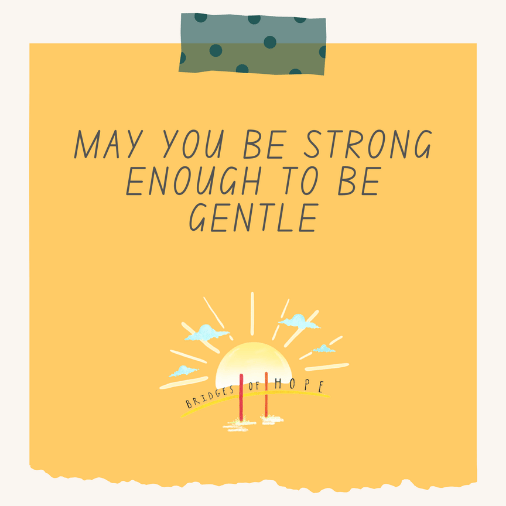
Bridges of Hope events were centred around the idea that messages of hope in public spaces can reach people when they need it the most. We asked our community, “what message of hope would impact you if you saw it on a local bridge?”
You can implement this idea, too! Use some of our previous messages of hope or create your own. Use the graphics to send to a friend digitally, or print them out to put up in your school, around your neighbourhood or at the local community centre!
Note: Make sure to ask appropriate personnel before attaching them to any sort of private property.