Personal Porchlight: Redefining Vulnerability, Visibility, Life Roles, and Boundaries
Unsinkable Storyteller: Parul Shah

This Unsinkable story discusses trauma related to childhood, betrayal, first responders, and suicide loss. We invite our community to read it only if it's the right time for them. If you're struggling, please reach out to the Crisis Text Line or Kids Help Phone or check out our resources on trauma & grief.
This story is an interview between Parul Shah & Mikaela Brewer (Publication Manager, Unsinkable). Parul Shah has been in the mental health industry for over 24 years and has owned her own clinical practice for the past 10 years. She has been married to a police officer for over 24 years and has two adult children. Parul understands the First responder life as a clinician, alongside vast lived experiences living with someone who carries mental and moral injuries, CPTSD, PTSD, and various other forms of mental and physical illness. Parul Shah is in the last stage of her PhD journey and hopes to defend her dissertation at the end of this year.
In the coming months, Parul's story will also be published in Lamplight Magazine, in print and digital. Lamplight Magazine is an Unsinkable publication, founded & edited by Mikaela to be a home for mental health care providers. It’s published digitally throughout the year, and once in print every October 13th.
Visibility, Vulnerability, and Courage: In your original Unsinkable story in 2019, you wrote that “Not all wounds are visible.” Through this story, and continued vulnerability & courage, you’ve made some of them visible to your family, community, and those you work with.
Between then & now, how has this practice of intentional & thoughtful openness changed for you?
Beautiful question! When I shared my original Unsinkable story back in 2019, I was connected but disconnected in so many ways. First, I felt connected to my true self, yet I truly wasn't connected until I learned that shared vulnerability comes with being disliked. That courage comes first before clarity. So, clarity was the first step to my intention, and openness came second with vulnerability and embracing being disliked.
How was it externally thrust upon you, perhaps in ways you didn’t expect?
Greatness doesn’t arrive innately, nor is it taught. Greatness comes through lived experiences, and with such, we drive this greatness with humility, integrity, honesty, and transparency.
Deep Pain in the Wake of Being Misunderstood: You’ve written about your shyness, enacting a stereotypically presumed lack of intelligence in school: “I was once told that my elementary teacher informed my parents that I would not pass high school if I continued to be quiet.” Quietness/shyness doesn’t mean you’re a poor communicator, either. In fact, communication—especially re: trauma—can’t always take shape with words: “As part of my healing process, I realized that my trauma carried a language that misled others about my true self.”
Could you share more about the language your trauma speaks, and how you’ve learned or remembered it as part of your healing? How has your relationship with voice & loudness/quietness changed? What does it mean for you, now, compared to what it meant in high school?
Every human carries a unique language for their own endured trauma. Yet, what’s similar, I believe, is the shame and guilt we carry. For a long time, I carried heavy loads of both. When you carry people–pleasing trauma, even along your healing journey, you may only realize after the fact how it seeps into life as shame and guilt. I’ve relearned—many times since 2019—that how I navigate my language either breaks open opportunities or initiates a trauma loophole. Where I’ve grown is: I no longer apologize for who I am. I’m weird, real, raw, imperfect, straightforward, and run my business ethically by the book. I’m beautifully broken. The only thing that truly changed is my language and tone. I no longer react. I no longer raise my voice. I no longer argue with anyone who sees or thinks of me differently. What’s in my control is always my reaction. My voice carries transparency—my words carry truth. How others see me has nothing to do with me at all; it says a lot about them.
What Survival Means: You’re a survivor & have endured trauma in so many forms.
How has your definition of ‘survival’ changed & expanded since you first wrote, “I’m a survivor?”
My definition of survival, between 2019 and now, has transformed into ways I couldn’t have imagined. I still identify myself as a survivor, however, by subtracting what it meant back then. We no longer add to our lived experiences. We shed and shift forward through bold and courageous moves. That’s what transforms the definition; I’m aligning my “I’m a survivor” to “Thriving.” Both can coexist.
What did it feel like to write it ten years ago?
Invigorating! All my life, I was told to keep myself small by not sharing. Writing has always been my “go to” since publishing my first piece of poetry in Grade 6! When Silken reached out to me back in November 2018, she offered a space where I knew I could unleash those chains—and it was time to.
What does it feel like to write it now?
Being transparent comes with baggage—of opinions, accusations, gossip, and endless debates about how others see you or want you to be. My younger self would have been reclusive and recoiled from writing now. Now, writing is a twofold openness: It allows my survivor perspective to thrive and allows someone to feel “Ah, she gets it,” without sharing anything about the details of what happened to us. To be seen, heard, and valued. My phone case has a quote: “Surround yourself with people who get it.”
Relationships Between First Responders—and Supporting Them: Your husband is a police officer who lives with mental/moral challenges, and you’ve been a member of the 911 family for over 24 years. Ultimately, the role first responders fulfill—not unlike mental health care providers in many ways—can & does impact family members. Stigma is pervasive, alongside a belief that folks cannot struggle with what they’re expected to be “experts” in.
As you & your husband navigated your own mental health while offering care to each other + others via your work, how did your relationship and/or careers shift, braid, and grow over time(perhaps especially in the last ten years since your husband returned to work from long-term disability leave)?
How much space and time do we have (lol)! As a psychotherapist, I don’t provide couples therapy, but what I’ve learned from my own lived experiences is that without communication, the breakdown of a relationship is imminent. We had a breakdown of three things:
Communication
Listening
Shadow work
This isn’t in order, but without doing our own therapy (shadow work), we couldn’t understand each other, which in turn broke down the communication needed to be able to listen. We first spent time growing as individuals, and eventually, with time, patience, and immense effort, we grew ourselves as a couple. When I shared my original story back in 2019, my husband returned to work, but not forlong. In February 2020, things moved from bad to worse, and he’s been off work ever since. Mental and moral injuries are exceptionally real, raw, and consuming for an officer, especially to their families, who often carry cumulative trauma, on and off duty.
How have these experiences contributed to your dedication to offering therapy for first responders & frontline workers?
More than ever before! I grew my business on the foundation of lived experience and academia. In March 2021, I began a Psychology PhD program with the hope of weaving PTSD/moral injury assessments into my clinic. I’ve since expanded my practice for first responders and their families, introducing a proactive mental health program to help them prepare for what can come next with the job, alongside a peer support group. In addition, I provide debrief check-ins for first responders. These spaces wouldn’t have come to life without my lived experiences. The dedication breathes every day in my home, within myself, and for our community. It has become a lifestyle.
An Ethos for Suicide Survivors: Sadly, speaking about suicide is still concealed or censored. And suicide survivors aren’t always afforded the same grief support, simply because many don’t know what to say. As you wrote, suicide survivors often aren’t asked if they’re okay as a result.
How do you care for yourself and process suicide loss & grief, in particular? We know grief is ongoing—do you carry it differently now than you used to?
I’m a 10x suicide loss survivor, and passive suicidal ideation lives in my home every day. So, taking care of me becomes essential. I’ve maintained taking every Friday off: No calls, no debriefs (I resource out if debrief becomes imminent), no emails, and no errands. Whether it’s for an hour, half a day, or a full day, it’s for me. Yes, life happens, so ‘pivot’ has become a word I’ve used over the last few years. But grief is every day; we just learn to live around it.
Do you have an ethos around support for suicide loss survivors that you’d like to share, connected to your work, PhD, and lived experience with loss/grief?
Allow ourselves to feel even when it becomes uncomfortable for others to hear. Stigma is very much alive in 2026, and hard conversations are not only warranted but a necessary part of grief. Some will say, “They’re no longer in pain,” and some will say, “Let it go,” or “snap out of it.” But when you’ve never felt this form of grief, it’s much harder to comprehend. Grief due to suicide loss is different, and holds anger, and an onslaught of questions about “Why?” or “Could, would, or should have” and “What if?” This line of questioning dies within us. So, what can we do when we’re here? We can seek out support groups when we’re ready, even if just to listen. Being in safe, familiar spaces with others can help us feel less alone. Know that it’s okay to laugh, feel joy, and move forward even as you grieve in these spaces. Self-care isn’t just baths and spas; it’s allowing ourselves to feel. Crying is cleansing, writing lets weight out, and dancing with grief allows us to feel the pain without words.
Motherhood, What Women Carry, and Building Boundaries: You wrote that “Moms have this innate ability to know when something is off; we just know.” But it seems, often, that no one has a reciprocal instinct for them.
Is this something that you feel can be nurtured? Have there been positive examples in your life?
Bursting the bubble! We aren’t supermoms—we’re imperfect moms. We bear up, stand up, speak up, hug it out, and provide love, support, and care. But we’re human too! Allowing our emotions out in front of children isn’t shameful—it shares with them that we, too, have bad days and require time-outs, too. Letting our children know that they don’t need to carry or hold our cries is important, but we can model that it’s okay to not be okay, which opens doors to harder conversations. In the summer of 2020, I remember crying in front of my children for the very first time. I was depleted and wanted to share that I didn’t have my sh** together, and that feeling overwhelmed is okay. I’m relearning how to grow and heal with this cry, which had no ownership for them, but shared that it’s okay to feel hard feelings. We’re human. Since then, my adult children have shared their emotions freely because I led the way to normalizing them.
So much is expected of mothers, which perhaps blends into the therapist role, and what women bear more broadly. How have you felt this?
I have felt this! We’re trained not to share emotions as therapists. But we’re not robots. We’re human first, therapist second. We just need to understand our own countertransference/transference. So, how do we not blend them? Boundaries! Boundaries! Boundaries!
Throughout your story, how has your relationship with being a care provider changed? As a mother, wife, therapist, friend, and co-worker? How is it a bit different across your identities/roles? Where hasn’t it been, in the past, and how have you crafted safe, healthy boundaries in the wake?
Our caregiver roles naturally change overtime: We grow wiser, our children grow up, and we navigate aging parents/caregivers.
I’m no longer a teacher for my adult children, but I’m a big supporter. I’ve learned and relearned that failure is part of building myself. I’m always a number 1 fan of my children. Failure catalyzes growth—not in the moment, but as we grow with it, it carries an immense lesson on how to navigate our own lives. Alongside failure, beating to your own drum is okay, being different is okay, and taking your time is okay.
As a therapist, I’m relearning that I’m not in the same spot as my clients, though I often understand their pain. Lessening the struggle is part of holding space for them. When there’s an impasse, I’ve learned to be okay with letting them move toward spaces that may offer them something more or different than I did.
As a wife, open communication has changed me for the better, especially in sharing emotions. I’m a better person because of that change. We co-created boundaries because we’re not one; we’re two individuals who care and love one another. Allowing ourselves to embrace our individuality grew our love for one another. Marriage comes with ample sacrifices and compromises. Love may become conditional, and that’s perfectly okay as long as it doesn’t diminish love. Boundaries rooted in love can help us embrace the wholeness of who we are behind the “husband and the wife” label.
As a friend, I’ve learned that I can only offer support when there’s an understanding that I will not change who I am for someone else, and don’t expect vice versa. My small circle of friends loves me for who I am. When we have candid conversations, we know that the advice offered isn’t a direct, expected change, but a doorway for us to process another way of thinking. When you change for someone else, you end up losing yourself in the process. Boundaries are healthy—let’s un-shame that!
As a co-worker/supervisor/mentor, I’ve learned so much! I’ve relearned that not all expressions are warranted. Not all information is needed. Not all business experiences require divulging. Boundaries mean it’s okay to say no, no more, not my vibe, and thank you, but no thank you. Boundaries don’t mean we aren’t cheering each other on; their power comes from respect, always given, even when something said doesn’t align with your belief system. Collaboration is key in any business; the moment we see each other as competition, growth withers. Know it’s okay to say no. Boundary up! Permission granted!
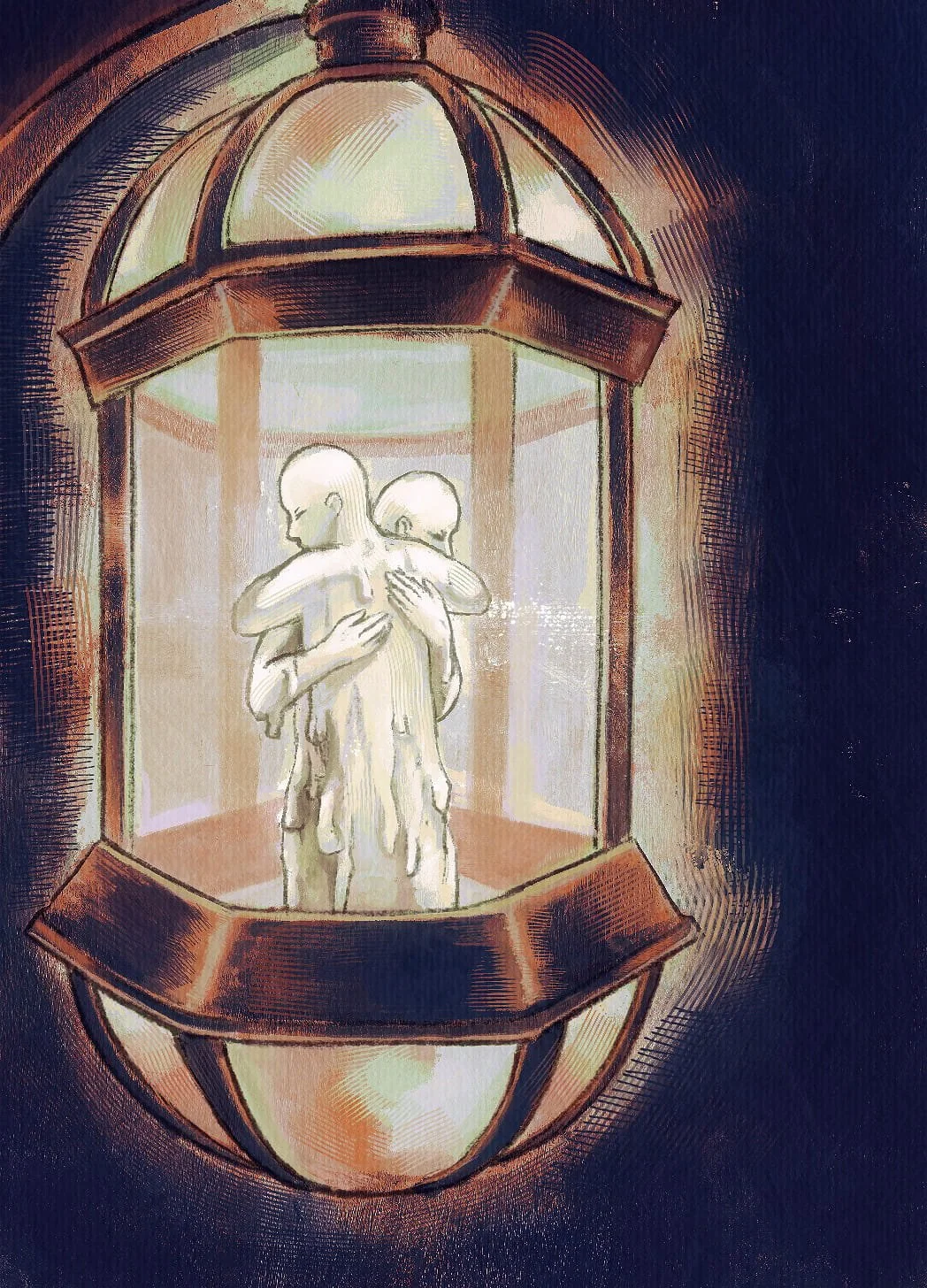
‘Porchlight’: If you’d like, I'd love for you to expand on what “Porchlight” means to you now—and has meant for you over time. You're most welcome to connect your response with Lamplight(which I founded after I lost my therapist to suicide).
‘Porchlight’ came to life when I was working as a frontline social worker and married into the first responder world.
‘Porchlight’ is a word to represent leaving our porchlight on when our uniformed loved ones are on a shift, to signal their pathway back home—no matter what condition they’re in. ‘Porchlight’ says: “It’s safe here. We hold space here. We breathe here. With no judgment. It’s safe to feel the feels—no questions asked.” Safety is paramount in an unsafe, high-risk occupation. It’s part of our foundation. When safety becomes grounded, we then learn/relearn to engage with the word trust. The journey may be long and heavy, but it isn’t supposed to be lonely. No one stands alone.
Ever since 2003, my porchlight has been on every night, even though my husband has been off duty since 2020. It’s a safety net without words. We just “get it.”
Connect with Parul here:
@embracingempowerment + @parul.shahofficial
Parul's 2019 story—one of Unsinkable’s first—broke open her journey as a care provider. Read "Breaking It Open as a Mental Health Professional in the 21st Century” here.
