
Unsinkable Storyteller: Clare Chika

The decision to leave one’s home is never an easy one. It’s almost reckless to leave your home country with no clear plans or definite idea of what your journey might look like. But a journey away from what’s familiar is almost always a journey towards oneself.
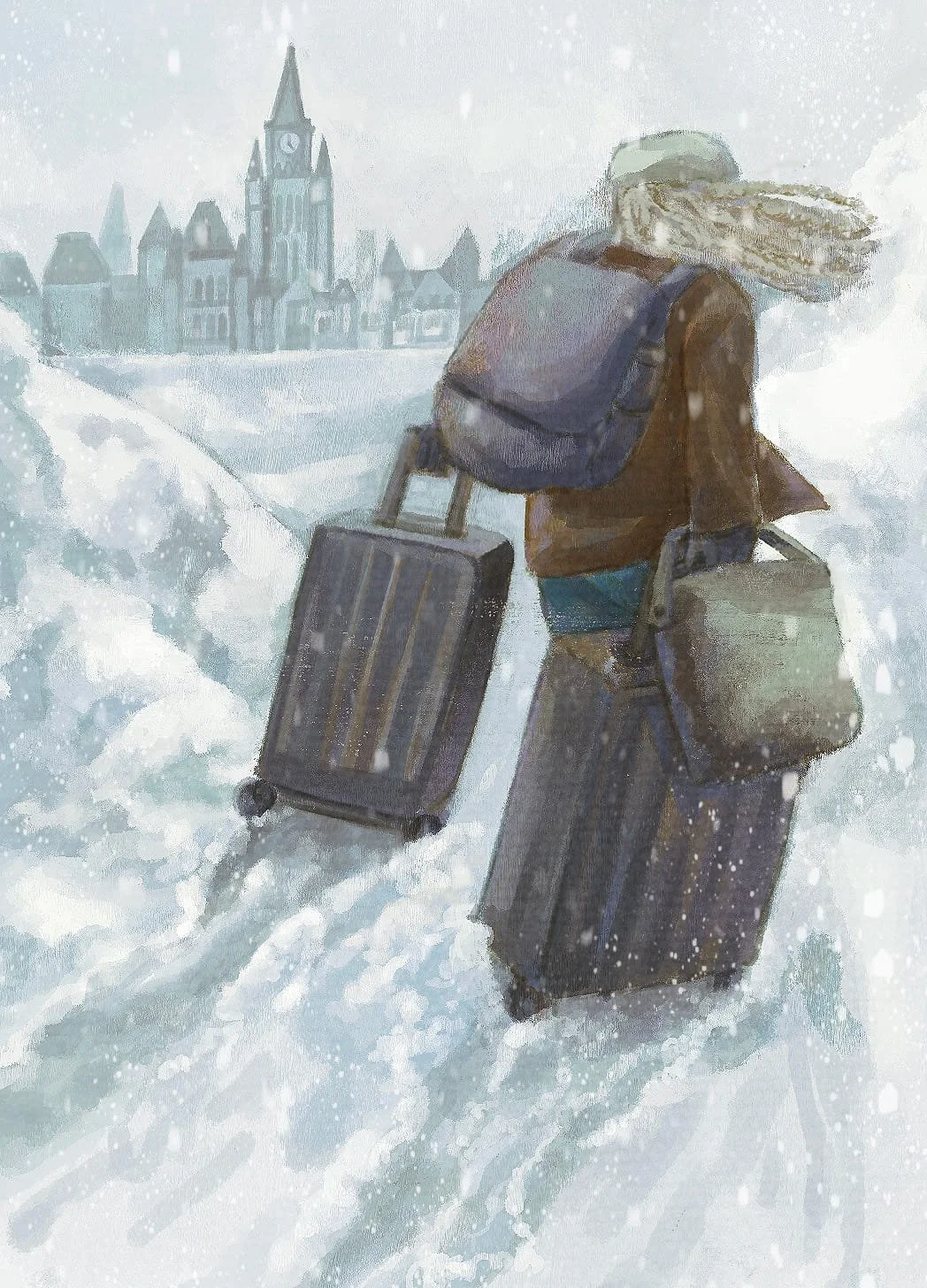
I arrived in Canada on a cold night in December. I went from being surrounded by family and close friends to being by myself, experiencing my first-ever snowstorm just before Christmas. I realize now how akin that night has been to my journey here. When I landed in Montreal, it was wet and cold following a snowstorm. I arrived at the hotel where I’d spend the night before taking the two-hour train ride to Ottawa the next morning. I was beginning a new life. I stepped out of the car, and the first thing I felt was the cold gush of wind in my face. I hauled two large suitcases, including smaller personal items—the entire sum of my life —through grey slush to the entrance of the hotel before putting them in a carrier. As I struggled with the suitcases, I started to process that I was alone now, in a new country, with a stubborn faith that everything would work out and seven hundred dollars to my name.
I had given so much of myself to make this dream a reality. My MBA fees cost a fortune. I managed to pull together donations from generous family members, the sale of a family property, and all the savings I had in exchange for this lifelong dream. I was ecstatic about the possibility of a new opportunity, an adventure that would set me on a different life path. I knew that leaving my family, closest friends, and a life that had been so familiar to me for one I knew nothing about would be hard. But no one tells you just how much chasing a dream really costs. You grieve the life you’ve known for the one that unfolds before you.
One of the first and most obvious changes in my life was my sense of style, or lack thereof. I wasn’t sure how to dress properly to stay warm and look fashionable. On a budget, it was hard to achieve both. A decent coat costs hundreds of dollars, and then there were layers (and more layers): Thermal wear, sweaters, beanies, socks—all the clothing I’d never had any need for. I bought a coat that looked good on the surface, but it was useless in keeping me warm. It looked chic, and I didn’t know any better. My hands and hips numbed with cold while I sat on a bench waiting for a bus that seemed to take forever. I’d anticipated certain challenges would come with building a new life, but nothing prepared me for the icy blast of my new reality.
Canadians are nice people; it’s one of the first things you hear about them. I believed that would make settling in Canada a lot easier—warmth amid the cold. What you don’t hear is that they’ve mastered how to keep a respectable distance. The shared experiences and common threads that once effortlessly connected me to others back home were missing here.
In time, I met a few people, and we made the usual promises to hang out sometime, but the follow-through never came. Attempts to keep in touch faded into silence, leaving me wondering if I would ever find my “tribe” here. I learned quickly that I’d need to be more intentional about creating a new community for myself here, a willingness to be vulnerable and navigate the unfamiliar spaces where true connection happens.
My first home in Ottawa was with a middle-aged white woman and three others. She had three cats, and it wasn’t long before they started to grow on me. Notes splattered around the house instructing everyone on how to conduct themselves to maintain a clean and organized home. “Keep both toilet seats closed,” one in the bathroom read; “Wipe the sink after use,” another followed in the bathroom; “Don’t change the temperature,” the one on the regulator read. I found it unproblematic because I’d never had a problem with rules. And even though the landlady was exacting, it was the closest feeling I could garner to being at home with family.
We came together to celebrate holidays and other festivities; I started to meet new people and, in turn, learn about Canadian culture and the warmth of her people—even though they seemed distant at first. I’d prepare local Nigerian dishes for potlucks, like jollof rice, and it would be appreciated. This interaction with others and learning a new way of living started to help me navigate the other pressures that came with settling here. I began to learn that I could immerse myself in this new life, whether in solitude or in learning how to be with others.
But after a while, the nostalgia started to get to me. I missed the warmth of the year-long sun on my skin as it wasn’t summer yet. I missed Sunday brunches with my family, bedtime stories with my nephew, and deep belly laughs with my sisters. I used to have friends who lived a few blocks away from me, and I would stroll over to their place at the end of a workday for dinner, drinks, or just a chat. All that seemed so far away, like a different iteration of my current life. Home is where the heart is, and my heart was away from me.
I realized that I would need to create a new home for myself. But I didn’t know what that would look like. I had been in solitude for months—the awareness of being alone hovering like the air above my head. The only thing that became familiar was the novelty of everything happening around me. In this, I learned a radical form of self-reliance. My family and close friends cared deeply and showed their support from far away, but ultimately, I was navigating this unfamiliar terrain alone. Whatever direction this journey was to go, it was all in my hands to make or mar.
This realization brought a different kind of pressure and the need to prove myself to feel worthy. I came face-to-face with parts of myself I had long tucked away. I became more aware of my insecurities: The quiet doubt that often crept in and the awareness that at a wrong turn or mistake, this could all come tumbling down. I became acquainted with the parts of myself that were guarded, distant, and reluctant to let anyone in because that felt safer than being disappointed. I developed a radical form of self-reliance, and learned that a certain kind of solitude is necessary for growth. I found and nurtured a new intimacy with myself that was both unsettling and strangely comforting, as if peeling back layers I didn’t know existed.
As graduate school progressed, so did the challenges. I joined the program a little later than my other classmates, so most of them had established their friend groups. The most interaction I had with others was when we were placed in groups for class projects. I spent most of the time by myself completing schoolwork and trying to secure an internship. Looking back now, those were some of the hardest days I experienced. I was walking this path alone, unsure where each step would lead me. I started to question myself, my social interaction skills, my capacities, and who I wanted to become.
After the gruelling winter months, spring brought a new air of hope. I landed a good internship with a health-tech company. I made a few friends both in and out of school. I began exploring the city and going out more. As the weather warmed up and the layers of clothing began to drop, I could finally dress up as I did back home: In bare, single clothing items—a vibe I recognized. I felt more grounded, but true to its form, loneliness would persist in other ways.
Weeks turned into months, and I was nearing the end of graduate school. It was almost time for a new adventure: The transition from being a student to settling down as a resident worker. New fears and hopes came with it. For one, I started the search for a full-time job. My classmates landed big positions in consulting, banking, and with the government. I wondered when my lucky break would come. The experience I’d gathered back home, along with a master’s degree, didn’t seem sufficient to land my dream job. My monthly bills and financial obligations remained present as my search continued.
But this time felt different. Even as I struggled with external needs, I was becoming more grounded and attentive to beauty in everyday life, even if it was intertwined with loneliness. I learned to be more patient with the expectations I had set myself. I started to invest in relationships that helped me feel nurtured. I learned that the polarities of life would always exist: The good and not-so-good days. I wrote and shared more about my experiences, which helped me connect with people both near and far away.
All of this led me to an opportunity to spend ten days on a writers’ retreat in Costa Rica. The experience I had on that trip, including a sound bath, water therapy, daily writing, and watching the sunset at the beach, made me feel deeply alive and present in who I was and what my life was becoming. I started to reckon with a vital understanding that I was making a home with myself at all times, near or far away from home.
I’m often asked, even years later, what I miss the most about home. I usually say that what I miss is not just things, but moments I can never get back—not in the same way. Like the birth of my latest niece. My father’s 80th birthday celebration. My iPhone shares memories from two, three, four years ago. I look back on that girl, bleary-eyed and full of hope. I realize I wouldn’t change a thing. There was nothing to undo; nothing to redo. All of those moments—the little disappointments, the chance encounters, the choices that seemed random—all led me to this place where my life has become a dream come true. In no way does this downplay some of the hardest moments of my life. Rather, joy and grief have coexisted as they continue to fill the path behind and ahead. My relationship with myself allows me to walk with both.
The good memories stay etched into the corner of my mind and feel like a warm blanket on a cold night—a respite for hard days. Other times, there remains a longing for the familiarity that only home can provide. But as time passes, I feel less like a stranger in a foreign land and more like I am returning to who I’ve always been.
At the end of my program, my sister and her family visited Canada to celebrate my graduation. In the time we spent together, the loneliness that weighed heavily on my chest like a wet lid finally lifted. I realized, then, that what I’d been missing wasn’t just company; it was the comfort of familiar love. Their presence reminded me of the bonds that endure across distances and time.
A few people have asked me if coming to Canada has been worth it. I believe it is. The sense of agency over my life I’ve gathered in these past years has been a transformative experience. It’s filled me with a sense of responsibility, knowing that my life is what I make. I may be far from home, but I’m grounded in the home that is my body. My heart found its way.
