
Unsinkable Storyteller: Carol Krause
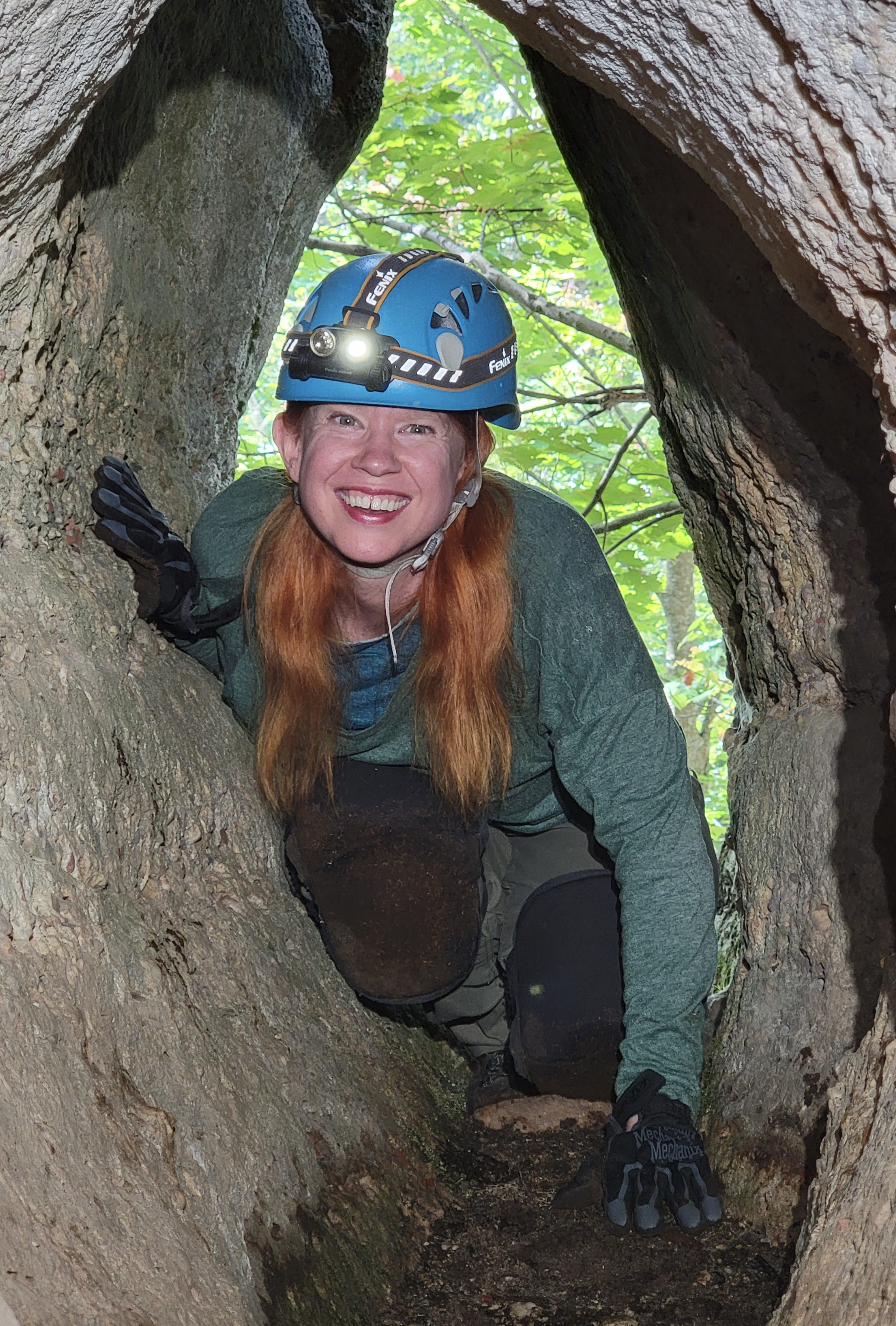
Photo by Marcus Buck
Check out this most recent interview with Carol Krause, author of A Bouquet of Glass! Poet Carol Krause on her Poetry Collection, A Bouquet of Glass – Guernica Editions
***
Book Review
A Bouquet of Glass by Carol Krause
Guernica Editions, 2025
I don’t have a naturally psychoactive mind, nor have I experienced psychosis. But grief, loss, and depression have been constants in my life. People and experiences have shattered within and around me. And each broken mirror or window reflected a fascinating relationship—between sand and glass.
What are you left with when glass shatters? Emerging from a mind with a propensity for the otherworldly and an unsuitability for the worldly, A Bouquet of Glass gathers the fragments of different realities into a vivid, piercing collection. These poems are the extra-ordinary stories of a poet living with a naturally psychoactive mind and a life-altering disability. From heightened altered states to spacious musings and playful concoctions, they are disarmingly human notes of love and loss. At once elegy and wild romp, they invite different pieces of a life to exist together uneasily, gracefully, precariously. You may wish to curl up with this book on one side of the glass, but only once a whirling storm has rushed through.
(From Guernica Editions)
***
“Everything in this book is real, but not all of it actually happened. How does an altered mind speak?”
A Bouquet of Glass turned my body upside down.
Somehow, through reading, I learned to breathe air under our world—in caves and beneath forest floors. This underworld felt, often, more comfortable than the one above it.
I don’t have a naturally psychoactive mind, nor have I experienced psychosis. But grief, loss, and depression have been constants in my life. People and experiences have shattered within and around me. And each broken mirror or window reflected a fascinating relationship—between sand and glass.
When I read the first line of A Bouquet of Glass’s description—“What are you left with when glass shatters?”—I thought of sand. Sand’s microbiome is rich with life (more than you might think), but it’s difficult to hold in our hands. Its inability to be held, slipping between fingers, at once enacts the sadness of a shattered life. But then, Carol offers us a bouquet of glass—shards not fully ground to grains, but pieces. Pieces that don’t need to fit back together. Pieces that can remain rough, jagged, uneasy, sharp, and so beautiful they can be tethered together to make flowers.
In The Anthropology of Water, Anne Carson asks:
“How can you see your life unless you leave it? It is already late when you wake up inside a question. Pilgrims were people who got the right wish. I’m asking you to study the dark.”
How does one embrace the dark enough to study it? In stunning prose poems, Carol’s collection responds to this question for us all. A Bouquet of Glass is infused with both literal and figurative darkness as secrets fall into the cracks of poems. Carol searches for the dark while stranded in it. And even though the dark is something we're taught to turn away from, she turns towards it. In “Writing About Death and Madness,” she writes, “The happier I am the more I turn towards my shadow.”
A Bouquet of Glass further contends with the dark in “When I Am Dying,” where Carol writes, “I only ask that you allow our eyes to rest inside each other.” Perhaps most poignantly, in “The Date I Never Had the Guts to Pull Off,” she both asks and answers, “What do you search for, when you’re stranded in the dark? I lean back and whisper, I always search for the dark.”
But A Bouquet of Glass is not merely an echo of Anne Carson’s words. The fact that they speak to one another (without aiming to) is the power of poetry that engages with what we can’t see in our lives.
I’ve long wondered if, when we feel most alive, we feel like we’re dying. In other words, if we feel alive, are we in right relationship with death? Is dying the same as living? Is that not the most profound redefinition of time?
Each chapter of Carol’s book is, perhaps, a glass stem, and each poem is a glass petal. Time is the current along which every poem asks us to question: who does time belong to? Echoes repeat, floods turn back into rivers, and words are trapped inside a prison with no walls. Gathering poems into a bouquet of glass shatters time’s supposed linearity. The book redefines our experience of time.
Our interpretation of time, of course, is learned. Carol writes a multiversal presence across relationships, naturally psychoactive experiences, deaths, treatments, changing senses of self, engagements with the natural world, and city life. Words like ‘hope,’ ‘new,’ ‘noble,’ and ‘better’ aren’t what mend the passage of time; it’s an old coat that does.
In this way, A Bouquet of Glass is also a questioning of our world’s politics. Experiencing the self as a bouquet of glass resists the status quo that allows an external system, state, or structure to organize our inner worlds. Carol’s poems illuminate how systems and culture not only define and treat disability, but also office plants, nature, light, and everything labelled as less.
How do we define what alters or clarifies? Why are the ‘monochromatic’ and ‘separate’ considered stable? Safer? Is all adjustment a form of numbing? What is an emergency? These are essential questions, and Carol spends time inside them, without writing answers for us. There may not be any. But as she notes in “The Hole in the Top of My Head,” we certainly make an agreement when we enter the world—one that we should question more often. It’s long been abundantly clear that folks who experience psychosis are criminalized and assumed to be dangerous. “Inside, Outside” made me wonder if we will ever agree that an “exposed heart [is the] safety hazard the world needs.”
An exposed heart is one that breaks, sees soil as “the soul of the world” (“Shelter”), is firelight, falls often, is aware of edges, looks into and through glass, holds gazes, and speaks with creatures. These themes and images recur throughout the book. But for someone with a naturally psychoactive mind experiencing altered states, the narratives Carol writes aren’t just using poetic tools—they’re real. A Bouquet of Glass explores the relationship between her lived experience and poetry, braiding poetic tools with honouring the reality of her lived experience.
But heartbreak and longing are the wake of knowing, especially the knowing required to write a collection of poems as personal and vulnerable as A Bouquet of Glass.
In an email to Carol, I shared that her poems offered me language for things I've experienced and been unable to find words for. She writes, in “Distance,” “Something is waiting for us. I can feel it in the distance. I suspect the fox has felt it too. Must be why he’s carrying the raccoon.”
How else can our deaths be carried? Our grief? Our longing?
Toni Morrison, in “The Site of Memory,” says:
“You know, they straightened out the Mississippi River in places, to make room for houses and livable acreage. Occasionally the river floods these places. “Floods” is the word they use, but in fact it is not flooding; it is remembering. Remembering where it used to be.”
If anything, Carol’s poems feel dedicated to remembering longing akin to this: longing to belong, to protect the Earth, to be held as real in all the ways we feel unreal. Longing is lost in “Everyone Here Has Feet:” “There was nowhere to put our longing, so we stopped wanting things,” and resurrected in “Light on the Bottom Floor:” “[B]low out the light beside me. Just so there is something to long for.”
In “no place i belong,” Carol is unwilling to cut herself in half to belong, and likewise, asks us to never saw away our edges to fit in a circle—itself, the only shape without edges.
And yet, with the unflinching reminder that intimacy is not always gentle (“It Does Not Seize Me by the Throat”), Carol invites us into the darkness with her in “Two:” “Maybe we could do something different entirely. Not something less. Not something more. Perhaps there is something hidden, like a tiny door. I say, What would it look like? She says, / I have no idea. I have never seen anything like it before.”
I’ve never read anything like A Bouquet of Glass before. And what a doorway to the dark that is—the only place we can create a life we haven’t seen.
Interview
A Bouquet of Glass by Carol Krause
Guernica Editions, 2025
Could you tell me why you chose the title A Bouquet of Glass to frame your poems?
I chose this title because it resonated with me intuitively. At the time I wrote A Bouquet of Glass, I felt that the glass had shattered. I had to give up meaningful work supporting young adults as a peer supporter and rely on assistance from family and state. I was looking back at the life I could have had and feeling a sense of loss. At the same time, I was gathering up many broken pieces and offering something delicate and iridescent as a gift to others. The many fragments in my book are brought together without being put back together. It is their brokenness that is beautiful.
The image of “a bouquet of glass” emerges from a poem about authorizing my father to assist with my finances and trying to follow the instructions he wrote for me on a sheet of paper. I speak back to a world that diminishes my way of being:
“I have other talents. Like slipping secrets from the moon, and dropping into the underbelly of the human mind. I collect things—shiny things that have been forgotten. I gather them in my trembling hands and offer up a bouquet of glass.”
For someone with a naturally psychoactive mind experiencing altered states, the experiences you write about are not just using poetic tools—they are real. Could you tell me about your statement, “Everything in this book is real, but not all of it actually happened”? What inspired your poetry about your realities?
The poems in my collection all emerge from my inner life and are real to me. They include what I directly experienced, sensed, and concocted during a mysterious time. A Bouquet of Glass illuminates moments of torment, as well as moments of transcendence and wonder. It is an exploration of the brutality and delight of heightened sensitivity.
My collection shares some of my struggles. I share the troubling experience I had when I thought that my teddy bear was possessed by a demon and placed him in a bush outside my home. I also share the terrifying experience I had when dark spirits tried to get inside me and harm me. Then I imagined what it would be like to have a playful conversation, inviting them to sit with me in the light.
A Bouquet of Glass is also an invitation to joy. You, the reader, are invited to join me in a mystical experience I had on a subway:
“i fold myself into a belonging that cannot be broken by time and somehow losing just feels like opening another door and in this moment i am happy knowing there are things i want but i want this more.”
Other poems include fictional expressions of my inner life. It would spoil the fun of the book to tell you more about which of the other extra-ordinary encounters actually happened, and which were poetic expressions of my inner life. And maybe some of the things that did not actually happen on a literal level did happen in ways that I am not fully aware of
My poems emerged from within me, as well as from the mystery beyond me. Many invisible friends from the other side helped me with the process of writing, and some skilled people helped edit my poems later on. When I wrote a lot of the poems in A Bouquet of Glass, I was in a trance state. My rational mind couldn’t keep up, so I just went with the flow. Sometimes my rational mind helped me edit my poems after writing them; sometimes it got in the way.
I was inspired by the words of guidance and disruption from beyond that I did not hear out loud but sensed from an intimate knowing. Many unpredictable encounters fill the pages in my collection. I was never alone as the poems toppled and tumbled over the walls, disrupting any sense of decorum.
I wrote about having a naturally psychoactive mind in A Bouquet of Glass. This is a way of framing having a divergent mind in non-medical terms. At the same time, the poetry in A Bouquet of Glass emerges from my dark and colourful experiences living with a psychotic condition. My poetry explores my struggles with the antipsychotics I took, but I needed (and still need) this treatment. During the time I wrote my book, I had awareness of my altered states, but it was difficult living in the regular world because I was bombarded with so much stimulation. While I wrote about feeling a sense of rupture, my altered states also inspired my poetry. My naturally psychoactive mind opened me to something wild and vivid that helped me see anew. Joy!
I deeply admire how you infuse your poems with themes of darkness: secrets falling into the cracks of poems & continuing to search for the dark while being stranded in it. The dark is something we're all taught to turn away from, but you turn towards it: “The happier I am the more I turn towards my shadow.” I would love to know why and how you wove darkness, death, shadow, aging, and the underground into your poems.
Thank you for your kind and insightful words. Many of the poems in my book are about turning towards the uncomfortable and inconvenient and being surprised by what emerges. Themes of darkness, death, shadow, aging, and the underground came to me naturally as I roamed in other realities, but they also emerged out of parts of my life story.
My experiences with madness over the years have drawn me towards what is hidden. These experiences have led me to enter the scary and uncomfortable places that I needed to face in order to heal, as well as sometimes being healing in themselves. In A Bouquet of Glass, I mention looking down into “the abyss,” which was a memory of being caught in the hell realms. There have been times that I felt “out of touch” and times that I felt “in touch.” I have experienced painful states like paranoia and terror, as well as luminous visions of the other side. They all have their place. For me, living with madness is not a process of getting over anything but getting under it and finding what it has to teach me. Then there is no over or under anymore, only a circle where nothing is left out.
There are many themes of loss in A Bouquet of Glass. I was not only looking back at what I had lost after going on disability income support—I was looking forward at what I would lose as a human who will one day die. Both death and madness invited me to practice the art of losing control. This heightened awareness of aging and death was related to my heightened awareness of life:
“I am an accidental accomplice to mortality. Here I am waving my ripped flag like every death fearing mortal, trying to make my way out of this wretched contract. There is nothing here for me. Yet you would never call me cursed if you could see the world I see. I am split apart in pieces every time a seed cracks through swollen ground—her broken offering a sweet bullet for the soul. I did not ask to live so close and so far, but the only thing ordinary about the ordinary world is when you set yourself apart. I'm being dragged into the center of a beauty I can't control. This love is something strange and beautiful that pulls me deep inside. I'd give up the whole world just to feel so alive.”
I was inspired to take end-of-life care training after accompanying a dear friend at the end of her life. This training involved reflecting on our own death, which has also been part of my spiritual practice. Intentionally contemplating aging and death have inspired some of my writings. We are all dying, and reflecting on that can help us to live, not more conveniently, but more fully. We may be invited to drop a few things along the way. It can help to travel light.
I am drawn towards the darkness as a caver who literally crawls into the earth. It is in descending into the unknown with my whole body that I can learn to inhabit the darkness. The underground is a place of healing for me, a place where I can play in the dark. It is a place where I can come alive:
“If I was to find my younger self here, that 23-year-old filled with demands, I would not reveal to her what life would make of her plans. I would simply ask her if she ever crawled through mud in the darkness. And would she like to? Maybe in May? It’s important she bring a helmet. There’s no need to tell the cave you are studying to become a lawyer. It’s best to lay your cheek in the dirt and ask:
What are you prepared to sacrifice for this?”
My task is to keep coming back to this question throughout my life as a way of remembering what I belong to. I need to keep releasing what is weighing me down in order to find my way home.
I invite you to join me, whatever it is you have lost. Maybe we can make our way together.
“Something is waiting for us. I can feel it in the distance.”
