From Discouragement to Determination: My Journey to Advocacy and Inclusion
Unsinkable Author: Nandita Sarin
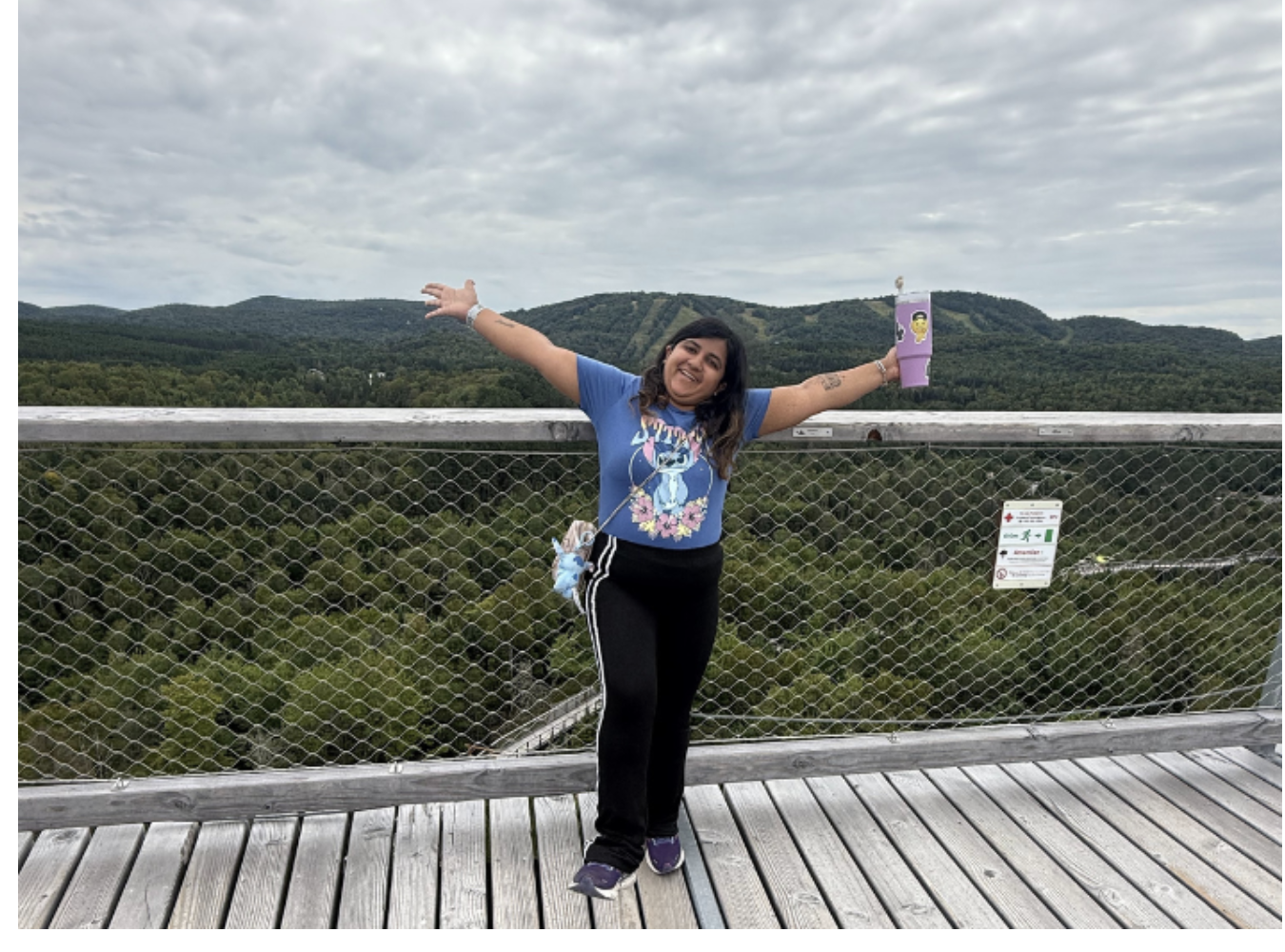
I was told from a young age that I couldn’t.
That I wouldn’t.
That I was too much, too difficult, too different.
Those words became the soundtrack of my childhood — not words of encouragement, but words that chipped away at my confidence and sense of self.
I grew up fighting battles I didn’t have the language to name. Anxiety made my mind a hurricane and my body a cage. Obsessive thoughts ruled my days, and autism shaped the way I experienced the world around me – I'll tell you more about that later. For now, what I'll say is that instead of receiving understanding patience, or curiosity, I was often met with judgement, misunderstanding, and rejection.
Early intervention was supposed to help me but what it did was traumatize me. Teachers and professionals did not approach me with trauma-informed practices or a strength-based lens. Instead, they focused on everything they thought was wrong with me, never once stopping to ask what had happened to me. No one asked my parents how they were coping. No one asked how I felt or what might make me feel safe. They just asked, “What’s wrong with your child?” as if I were a problem that needed fixing.
My school referred me to the Children’s Aid Society — not because I was in danger, but because I was misunderstood. They misinterpreted my neurodivergence as a signal that my basic meets were not being met at home. Of course, this wasn’t true. However, this decision, made without understanding the depth of my experience, changed the course of my childhood.
Each time I changed schools, I had to start over, which left me feeling alone, judged, and worried about my future. With every move came new faces, new rules, new classrooms, and new walls to climb just to be seen. Several times I’ve been an orphan.
I watched other children build friendships with ease while I struggled to find my place. I stood on the sidelines, desperate to belong, while the world seemed to move forward without me. The question, “what if?” haunted me constantly. What if I never fit in? What if I never find a place where I belong? The uncertainty was heavy, and hope felt far away.
As I entered my teenage years, the struggles didn’t fade — they got worse. Bullying became part of my daily life. Social exclusion and misunderstandings surrounded me. The guidance counsellor’s office became the only space where I felt truly seen. Teachers labeled me as disruptive. I was removed from Google Classrooms and school websites because they believed I posted too much, calling me a “trouble child.” They created behavior charts that treated my reassurance-seeking, and attention-seeking — all deeply human ways I tried to show care and connect — as things to be eliminated. They made me write everything by hand instead of printing like the other students. They saw my attempts to connect as misbehavior, but really I was just longing for understanding and instead of understanding my needs, they punished me for them. I was punished for behaviors that were simply parts of who I was.
Education should nurture, support, and celebrate differences. Instead, I was misunderstood and excluded. But despite all of this, a small part of me still believed that I was more than the labels they gave me.
Then came a turning point.
In 2015, just before I entered high school, I underwent a series of assessments and was officially diagnosed with autism, obsessive-compulsive disorder, and anxiety disorder. This brought on a strange mix of relief and fear. Finally, there was an explanation for why I experienced the world the way I did. But I didn’t want my diagnosis to define me. I didn’t want people to only see my labels. I wanted to be loved for who I was — not for what I had been diagnosed with.
That desire — to be seen, heard, and accepted — began to shape my purpose. It lit a fire in me that I didn’t yet fully understand. I knew I didn’t want other children to go through what I went through. I wanted to be part of building a system that saw children as whole, complex, and capable, not broken or in need of fixing. That purpose grew as I moved into high school and beyond.
High school was manageable, but the real transformation began when I started studying Early Childhood Education in 2022, and then slowly transitioning into Early Childhood Studies in 2024. I wanted to make something meaningful out of my pain. I wanted to become the educator and advocate I needed when I was a child.
The transition to post-secondary life was not easy. I was excited but terrified. I worried that I wouldn’t make friends, that no one would like me, that I would once again be misunderstood. These fears manifested in familiar ways — reassurance-seeking in the form of frequent emailing.I was constantly checking in with people I cared about, desperate to know that I was okay, that our relationships were okay.
And this is where everything began to change — because this time, I wasn’t alone.
In this chapter of my life, Elena entered the story.
Elena was more than a professor — she was a guiding light. She is patient, nurturing, kind, and deeply understanding. She listened to me when I felt unheard. She believed in me when I doubted myself. She saw beyond my anxiety and my behaviors to the heart of who I am. Elena never judged me. She met me with compassion, even when I accidentally pushed boundaries or struggled to give people space.
Elena introduced me to the ‘Let Them’ theory by Mel Robbins — a lesson that changed my life. “’Let them’,” she said, “is about letting go of the need to control how others act or feel. It’s about protecting your energy and focusing on your growth. And ‘Let me’ is about reclaiming your power.” Through her guidance, I learned that relationships should grow naturally. I didn’t need to chase or force them. I didn’t have to change who I was to be worthy of connection.
Elena has changed my life in ways words can barely capture. She showed me that caring deeply is not a flaw, it is a strength. She reminded me that my voice matters. She has helped me step into my authenticity with courage and grace. She believed in me when I couldn’t believe in myself. She helped me know that I can let relationships develop naturally and that I won’t always be abandoned. For these things I am endlessly grateful. Elena’s mentorship has been one of the most profound gifts of my life.
Around this time, Amina also entered my journey.
Amina, the Associate Head, Early Childhood Studies at the University of Guelph-Humber, is a beam of light — joyful, inspiring, and always ready to help. Her smile has a way of making even the hardest days feel lighter. As a mentor of mine, she has been patient and supportive, always available to talk through challenges and celebrate my successes. Amina’s kindness and encouragement reminded me that I was never alone — that support can come from the most unexpected places and that it can change everything.
Together, Elena and Amina became pillars in my life. They saw the person behind the labels. They valued my heart and my intentions. They taught me lessons that went far beyond the classroom — lessons about self-worth, boundaries, resilience, and growth. Their support helped me rewrite the story I had been told about myself since childhood. Now I understand that I’m more than okay just being myself, authentically, the way that I am.
I am enough.
Looking back, I see how far I’ve come. I have faced discrimination. I’ve been told I don’t belong, that I’m not good enough, that I lack confidence, can't multitask, or can’t be a teacher multiple times. I’ve been misunderstood, mislabeled, and underestimated. But none of that defines me. My worth is not determined by other people’s opinions — and neither is yours.
Today, I stand as a future educator and advocate for children’s mental health (and my own) who is determined to create the change I needed as a child. I want to build classrooms and communities where children are seen for their strengths, not their perceived deficits. Where their needs are met with empathy, not punishment. Where their differences are celebrated, not silenced. I want to ensure that no child is ever made to feel the way I once did — unseen, unheard, and unworthy.
To anyone beginning their journey — especially those entering the field of early childhood education — I want you to know this: Never let anyone else define you. There will be people who doubt you, discourage you, and try to tell you who you are. Let them. Let them doubt. Let them misunderstand. Let them walk away. Because none of that is your problem.
My journey has been far from easy. It has been filled with pain, misunderstanding, and moments of deep loneliness. But it has also been filled with resilience, strength, and hope. It has shown me that we are more than the labels we are given. We are more than the assumptions people make about us. And we are capable of transforming our pain into purpose.
I am still a work in progress — and that’s okay. I am still learning, growing, and evolving. But I know this: I am no longer the discouraged child I once was. I am Nandita — an advocate, an educator, and a voice for children who deserve to be seen for who they truly are.
And this is only the beginning.
